s)
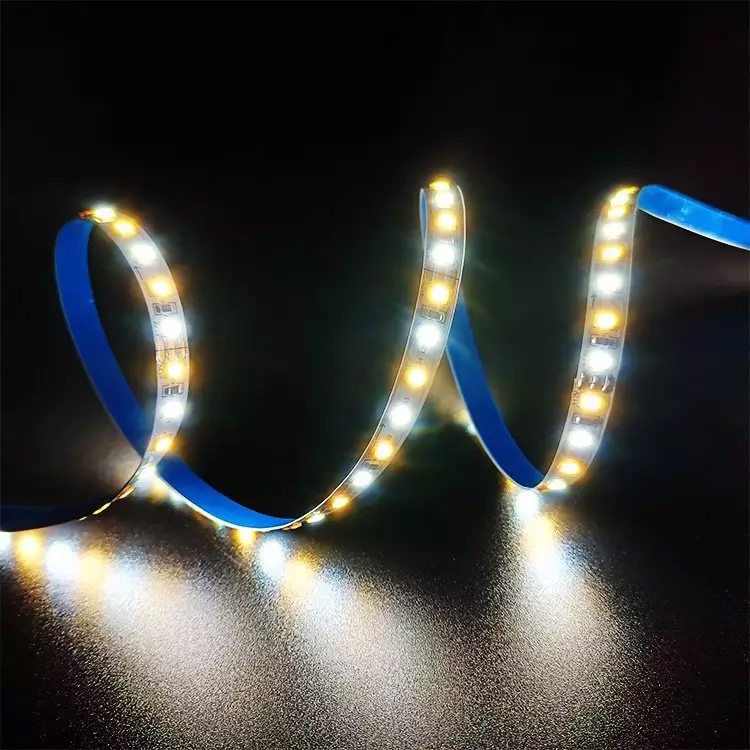
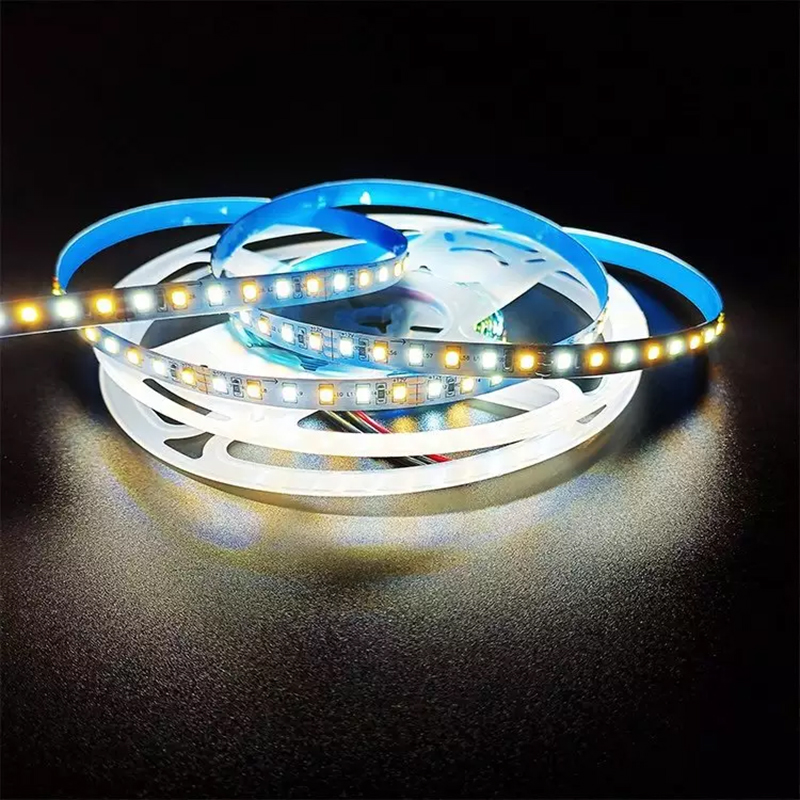
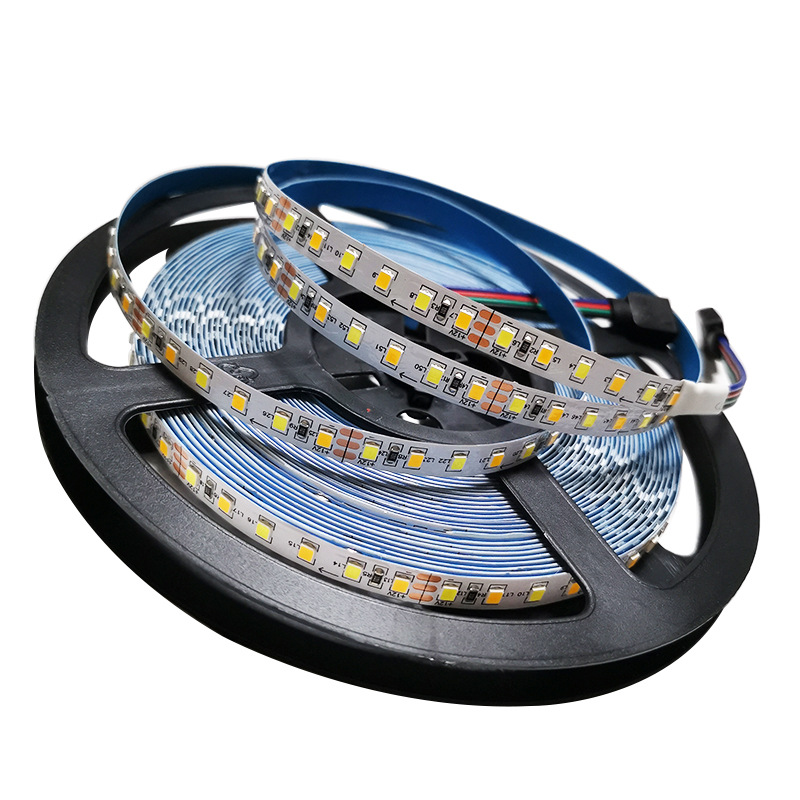
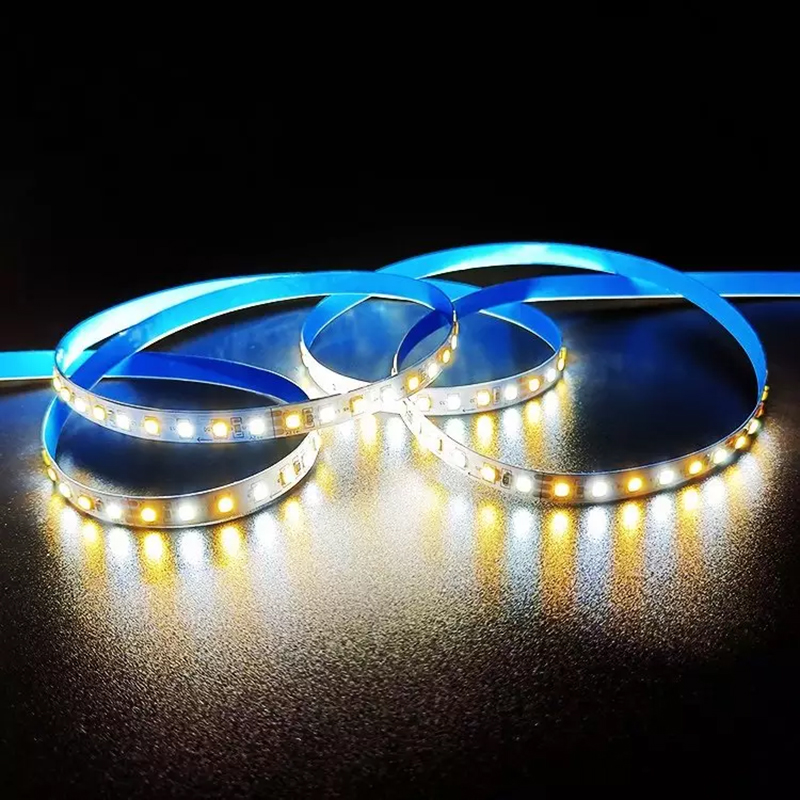
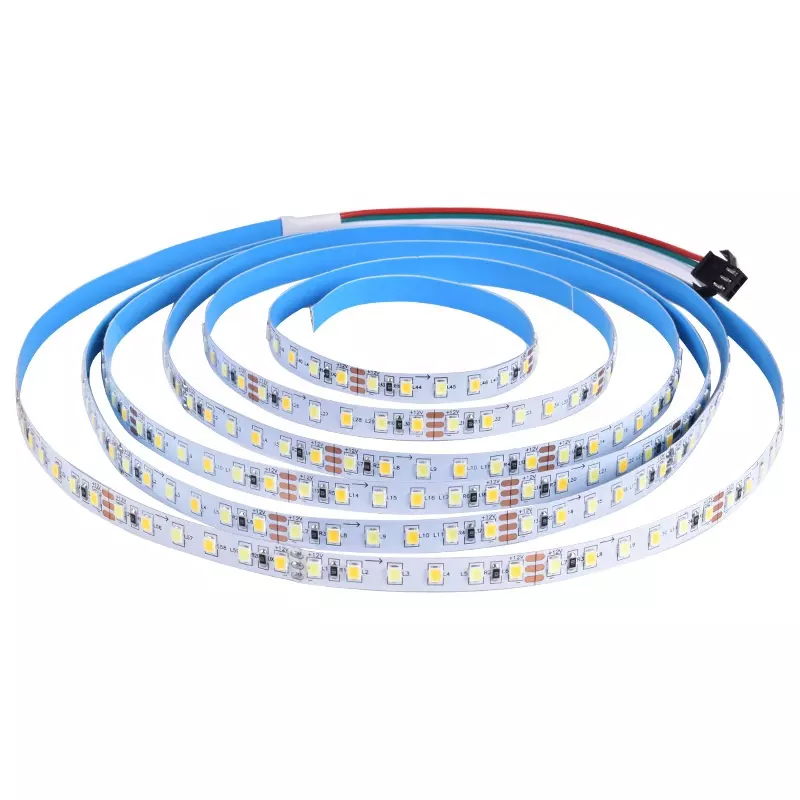
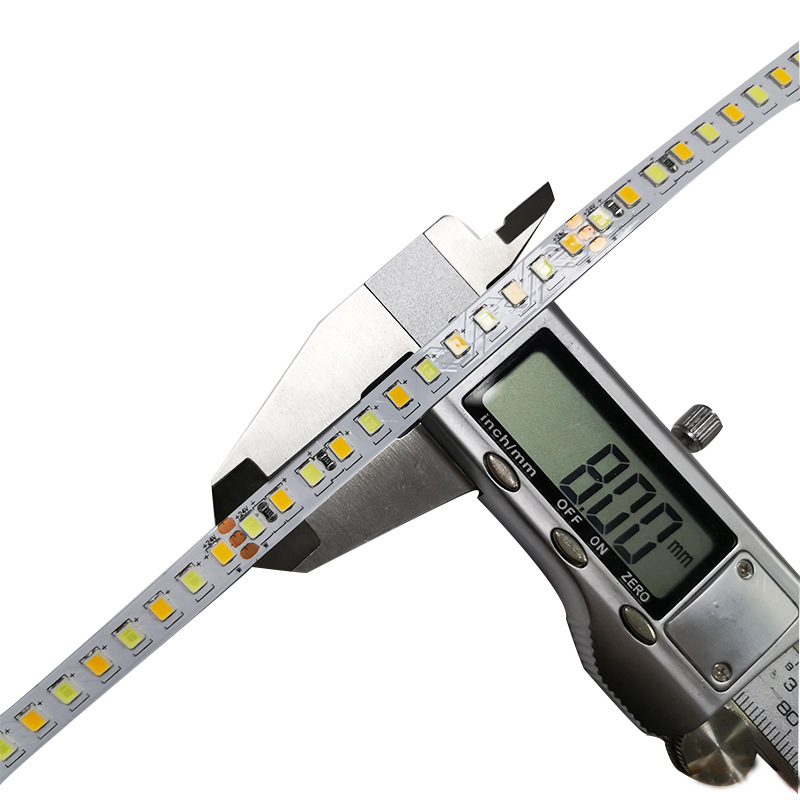
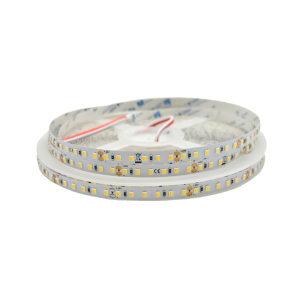
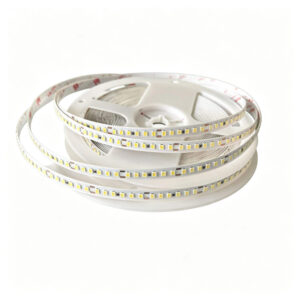
Dual-color temperature LED strip = **cold white LED beads + warm white LED beads arranged alternately**, not changing color of a single LED bead, but mixing and dimming of two color temperature LED beads. Commonly in 2835, 5050, 2216 packages.
> Common color temperature combinations: **3000K warm yellow + 6000K cold white**; also 2700K + 5000K, 4000K + 6500K
## 1. Two mainstream ways of LED bead arrangement
### ① Alternating arrangement (most commonly used)
`Warm-Cold-Warm-Cold-Warm-Cold` One warm and one cold LED bead arranged alternately
– Advantages: Uniform light mixing, soft light spot, no color blocks visible when masking
– Disadvantages: Under the same length, the brightness of a single-color full-on is slightly lower than a single-color LED strip
– Common: 120 beads/meter, actually 60 warm + 60 cold
### ② Segmented arrangement (poor, try to avoid)
One full warm section, one full cold section, several warm then several cold
– Disadvantages: Without thickening the mask, there will be **a yellow and white color patch**, difficult to achieve smooth light mixing, many cheap LED strips use this method.
## 2. Circuit logic (important)
Dual-color temperature is **two independent circuits**:
– W: Warm light (3000K)
– C: Cold light (6000K)
– V+: Common positive pole
> Wiring: V+ shared, W and C controlled separately, **cannot be directly connected to ordinary DC power supply, must be equipped with dual-color temperature controller**.
– Only W on: Pure warm light; only C on: Pure cold light; W+C simultaneously on: Intermediate mixed color temperature (4000K-4500K neutral light).
## 3. Voltage specifications
– Low voltage: 12V / 24V (home decoration ceiling, cabinets prefer 24V, lower voltage drop)
– High voltage 220V dual-color temperature LED strip: No power supply, but maintenance is troublesome, the dimmer costs are high.
## 4. How to view and purchase parameters
1. Beads count: **120 beads/meter (60 warm + 60 cold)** for home use, good cost-effectiveness; 240 beads for better mixing effect, more expensive.
2. Luminous efficiency: For home decoration, choose **Ra≥90**; for general lighting, Ra80.
3. PCB board: Select double-sided board, single-sided board has a significant voltage drop for long lengths.
4. Cutting: Every **3 LED beads are cut**. For dual-color temperature, it is cut in groups of 3.
5. Power reference: 24V 120 beads dual-color temperature ≈ 9-12W/m.
## 6. Controller types
1. DC controller: 0-10V, PWM dual-color temperature controller; Bluetooth/WiFi Mi Home Daidiao smart.
2. Note: Ordinary single-color dimmer cannot be used for dual-color temperature LED strips.
## 7. Common pitfalls
1. Buy cheap LED strips, arrange beads in segments, and after installation, yellow and white color patches appear.
2. Connect dual-color temperature LED strips directly to DC power supply, can only be simultaneously cold and warm, cannot adjust the color temperature.
3. For 12V LED strips over 5 meters, it is not recommended to supply power to one end, supply power to both ends, otherwise the color temperature at the far end will be off-color and the brightness will decrease.
4. The mask must be selected as a white diffusion mask, transparent masks will see the individual cold and warm LED beads particles.
## 7. Comparison with COB dual-color temperature
– LED bead type dual-color temperature: Low cost, convenient maintenance; poor mask will see particles.
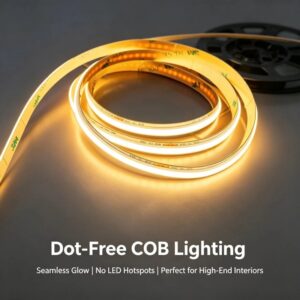
– COB dual-color temperature: No particle sensation, excellent light mixing; expensive, replacing the entire section is costly.
评价
目前还没有评价